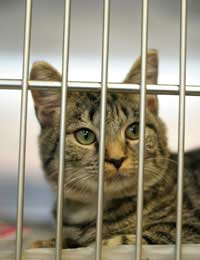
Once you have decided that this is for you, there are several things to consider long before the first animals arrive. Namely, rules and regulations, finance and practical help.
If a premises and land have not been used as an animal shelter before, find out from your local council about ‘change of use’ and necessary planning permissions. Is the proposed site in a residential area? Will the donations received be enough to register your shelter as a ‘non-profit charity’? Is there a local vet who will work with you? Are buildings-that are intended to house animals-suitable, hygienic and comfortable? Where will the different species exercise? How will you pay for food, bedding, veterinary fees etc if funds are insufficient? Who will help to feed, groom, exercise and care for the animals? How many cats/dogs/rabbits/chickens/ponies can you home at once? What animals are best suited to the facilities you are able to offer and how experienced are you in caring for them? There is a lot to consider!
Practical Help
Volunteers are the mainstay of rescue centres, shelters and the majority of animal charities. In order to succeed (and so help more animals) you need to be a good organiser and get on well with the people who have been inspired to offer you their help! In the animals’ best interests this needs to be established in advance-the better the team, the more you can achieve together. Have a rota prepared, so your helpers know when they are expected to be there and what duties they are required to do. Animals need routine, so it is important to plan the basic timetable early on. Try to arrange emergency cover and make sure insurance is looked into-including public liability.
Preparation is paramount to the smooth running of your new shelter. Equipment, like feeding bowls, bedding, dog leads and collars, cat litter and trays, wormers, flea treatments, shampoos and grooming kits, can be stock-piled in readiness. Some private rescue centres have ‘advertisement bins’ in local pet stores and supermarkets; where people leave donations of tinned food and other goods to help homeless animals. Local companies may donate money or sponsor an animal if asked. Approach local papers, radio stations and TV news channels-they might be interested in your story. Send out flyers, get people involved! Publicity helps to get you noticed and raise public awareness of your animal shelter.
Buildings and Land
It would be a great shame to rescue animals only to have them get sick because of inadequate disinfection. Kennels, catteries, stables, hutches, all enclosures, bedding, bowls and equipment must be clean; all the time! Volunteers and visitors must be made aware of the importance of washing their hands and appropriate facilities provided.
If there are turn out paddocks, fencing must be safe and secure and expert advice sought on poisonous plants, harrowing and whether the land is suitable for grazing. Fresh water should also be available and shelter against sun, wind and rain provided. Consider the need for rugs too, and, if housing large animals, where’s the muck heap going to be and how will it be disposed of? If poultry are among the shelter’s residents, they will need protection from foxes and other predators!
Administration
Running a shelter generates a lot of paperwork: records for each animal, volunteers’ rota's, dates and programmes for open days and other events, copies of orders for food and other essentials, fund-raising and general book-keeping, to name but a few. There are some free computer packages on offer that may make this less of a headache-utilise the skills of people who have offered their help-designate!
The Rewards
When the first cat, dog, rabbit, pony, or whatever else you have taken in, has settled and the healing process has begun, then you will know that it’s all been worth it. Some animals may stay for the rest of their lives, some a few days or weeks, but, for each animal that the shelter helps, you and your team are the ones who made it possible.
Business Energy With a Difference
If you are looking for business energy or need advanced solutions like remote energy monitoring, new supplies, downgrading or upgrading capacity, have a no obligation chat with Purely Energy.
Hello guys, just came across this site and it warms my heart that there aren't many people willing to help these little guys. Someone mentioned setting up a groups we can support, guide and exchange notes.
Tazzi - 14-May-25 @ 9:55 PM
Hello I am live in birmingham and I really like to open rescue centre for animals . Please help me with the step by step
GinA - 29-Mar-25 @ 7:11 AM
Just read this. I was considering buying land with stables into a cat sanctuary and I didn't realise you have to approach a council for change of use.
But still think it would be a very interesting idea
Fitzy - 1-Mar-25 @ 7:06 AM
Does anyone know where I can build a dog shelter like do I buy a warehouse and build in that??
S - 27-Feb-25 @ 3:26 PM
Hi guys, I see there are many of us here in the UK. Have you guys managed to set up a WhatsApp group or anything like that to stay connected and progress with our ambition together?
Humera - 31-Jan-25 @ 8:06 AM
Hi all, I currently manage a children's home and love it but I have always wanted to care for animals. Can anyone help me to learn how to initiate this? I live in Liverpool x
Han - 18-Jan-25 @ 9:17 PM
Hi I see there are like minded individuals who feel and know the need to help animals more so now than ever! It would be amazing if we could get in contact with one another and make this dream our reality!I am living in th e UK currently where I have four felines and a dog but have helped and rescued many animals and got them the help they so greatly deserve! Together we can make this world better and beautiful. Please reach out and contact me or one another so we can make this possible :)
Emma - 1-Dec-24 @ 4:48 PM
I look after fieldmice that already inhabit an old church, the 'church mice' if you like. As the mice destroy woodwork, masonry, they have been captured over the last decade and placed in very congenial homes, bed & breakfast on the house, & during spring/summer season those likely to survive released into appropriate wildernesses. I need, however, to establish this more as a mice sanctuary as they get older & some need palliative care. The council says this is change of use of the church, where I say it is part of the building's maintenance, this looking after would not be necessary if the resident mice were not building destructive. Regardless of our differences, what should I do to regulate their being looked after, what options are there, as fieldmice are not considered protected mammals.j
FiMice - 21-Nov-24 @ 1:20 PM
Hi, I'm also animal crazy and would like to do something to help in life. have you guys started it? I live in Malvern do I think few of us are pretty local!
Monika - 16-Nov-24 @ 8:47 AM
@Hope I would love to be part of your journey, I myself love animals,an I noticed the huge need to for a caring local animal rescue.
Cj - 22-Oct-24 @ 1:03 AM
Hi Cal and Vic I'm looking to open a small pet sanctuary initially as I'm just over the Severn bridge in Wales maybe we can get something up and running between us as I'm currently not working and want to help animals that can't help themselves.
Di - 6-Aug-24 @ 1:57 PM
i’m only 17 and i have always wanted to open my own animal shelter. i want to try and make it possible to open multiple in countries where animal
care isn’t popular, like Greece and Brazil. my dream is to end animal cruelty, i know most likely there isalways going to be the extremely unlucky defenceless animal in need. but i want to meet people that have the same passion as me and what to help like i do.
Hope - 28-Jul-24 @ 10:39 PM
Hi Vic and Callum, I am based in North Yate - I'm in a similar situation! Perhaps we could start a group chat with ideas? I fostered cats last year and adopted 2 more so with 3 cats at the moment I'm at full capacity for my one bed flat. My dream is an animal sanctuary with cats and dogs and rescued farm animals (but any unwanted or injured animal essentially). I want them to be able to just roam free and do their thing happily :)
Eva - 15-Jun-24 @ 4:20 AM
Hello to Callum, I am based in Cheltenham and am animal crazy, I wan to rescue also! I do know a farmer who will give me a bit of land.
Vic - 20-Apr-24 @ 12:40 PM
Hi there,
My name is Callum, I'm currently working full time in leisure in the south west (Wiltshire)
I'm also buying and selling anything to fund rescuing but mainly training dogs in shelters looking for homes, right now, I can't really re-home (I foster when I can) with my shift work and leave everything to partner. So now I'm going to shelters to help train dogs, hopefully helping them achieve the goal of a new home.
I'm so keen on starting an animal shelter/non profit or whatever is best. Obviously right now, I need to work to earn a living which is the most frustrating because helping dogs is the only thing I really want to do.
I don't think I need to start as a "proper shelter" but could this be done on a small scale first? For eg. In my house, taking in a couple of dogs and rehoming?
Any advice is welcome. Also happy to team up if anyone's around Wiltshire/Start of Cotswold (maybe moving soon to Cirencester area).
Thank you
Cal - 18-Apr-24 @ 6:11 PM
Hi, my daughter (24y) seems to be collecting unwanted animals so far she has 4 horses, 2 cats , a dog and today someone gave her lamb that was not doing well ( one of a triplet)
She works with horses as her main job. All her money goes to pay for all the creatures in her care.
I really think she needs to start a rescue as I don’t think she can say no to looking after animals that need help but how do we help her do that?
Any advice on how to find land, who to speak to , GAYE , where to find out about regulations would be amazing.
Thank you
Hele - 11-Apr-24 @ 1:19 PM
Hi Dani
That would be amazing. I am still in the process of getting my veterinary nurse qualification once I have completed the course I'm hoping to get things moving.
I will definitely be Hertfordshire based.
Is there anyway I can get InTouch with you?
Andrea - 2-Apr-24 @ 8:09 AM
Hi,im doing a project in school on How much would it cost too open a animal shelter?Hopefully if this does eventually happen it would be a no kill animal shelter for all species.I have no idea on how muchit would actually cost to open one with the cages,beds,water and food bowls,food,electricity,etc.I was hoping you could help me?Thanks
Chloe o Sullivan - 14-Mar-24 @ 10:45 AM
Can I have more info on hiw to start up a rescue centre please as I would love a dig rescue / rehabilitationcenteranimals waiting to be fostered or to bebe get ready for adoption please
Enya and kikidee - 2-Mar-24 @ 1:24 PM
Hi there,
I’m thinking of starting up an animal rescue/ farm in the East Yorkshire area but I have no idea how or where to start!
I’d like to start being a cat and dog rescue shelter first of all, then be a farm with chickens, bees, goats etc and also grow my own fruits and vegetables. Eventually sell my eggs, honey, jams, chutney and homegrown produce locally.
If anyone can offer any help, information, advice or assistance I would be so grateful. I think EVERY animal deserves to be loved and cared for, and have a forever home.
Thank you from the bottom of my heart, Fiona (07515 941653)
Fiona - 25-Feb-24 @ 4:28 AM
Hi Andrea
I'm in Dunstable so not far from you and I think it's great that your planning to set up an animal rescue. In the last year I've taken so many cats into my home as I couldn't see them sufferbut I've gone from 4 to 20 cats and I've decided to keep them all but I would be interested in helping you with your rescue so I could help more animals to have a good life.
June
June - 5-Feb-24 @ 9:59 PM
Hello,
It shows it's not just me who wants to create a business like an animal shelter to help these animals. I am currently studying a zookeeping course(level 2) and noticed that it doesn't pay that well. Not that I care about the money, but the cost of living is ridiculous, so I want a job that pays well. I am not sure if this job would pay well but I have had enough of animals being treated like trash. They were put here for a reason; why do our actions cost them their lives? If anyone can give me some advice on where to start or if they would like to help me then my number is 07575264276. I am also 19 years old.
Thank you,
Ariana.
AOK - 30-Dec-23 @ 4:54 PM
as an animal lover i have fostered many dogs but would love to start a little rescue/shelter up i just would not know where to start or who to approach first
any advice would be brilliant
i am in the essex area
tasha - 26-Dec-23 @ 10:26 AM
I'm at Helensburgh,Scotland and I would like to start up a cat sanctuary as we have a problem with semi ferrule cat at my work,
Tens of them. As they live about our boiler house and warm areas.
I want to set one up here not just for my work cat's but also for the public's cats to be rehomed as this Is also a growing problem in the area.
We don't have a shelter in our area and the nearest one is about 20 miles away. I've heard they are constantly full. Argyll and Bute is a vast area and could really benefit from this type of service.
I worked as a volunteer in an animal home after school and at the weekends from I was 11 until I was 15. Do you have any advise of how or which way to go to setting up this type of Cat charity/Start up/community group ?
Mac - 20-Dec-23 @ 1:38 PM
Hello my fellow animal lovers especially dogs!! I own a lot of dogs, and over the past year or two I’ve been thinking to start my own dog shelter organisation but I didn’t know the process. In terms of how to ask permission for land and all the legal business. So if anyone cares enough to educate me step by step feel free!!
Abs - 18-Dec-23 @ 2:57 AM
Hi Dani. That would be amazing. I will be looking for volunteers as soon as I am up and running. At the moment I am taking a 2 year course on Animal welfare to get a good understanding on medical needs, animal behaviour, different species etc.
If there is anyonewho knows of any land/premises available for rent suitable, in or around Hertfordshire, please let me know.
Andrea - 20-Nov-23 @ 12:58 PM
Hi Andrea,
I adopted a disabled do last year and have found it such a gratifying and amazing experience I would like to try and set up an online rescue site. I live in Welwyn Garden city and think my skillset would be best used on the admin side of things. If you'd like to try and see if we can and work together in some way please get in touch.
Dani - 8-Nov-23 @ 2:10 PM
Will there be a monthly inspection of animal shelters for cleanliness?
SI - 21-Oct-23 @ 6:35 AM
Can you please help. I have been working in jobs I hate for years and one of the joys in my life are my animals. I own 5 cats and 4 dogs, they are my absolute world. As a child I always wanted to be a vet but being young and stupid I didn't like the idea of studying for 7 years. ( what a fool) anyway I've got to a point in my life where I want to give the joy back to animals and it has been my dream for a very long time to start up a animal rescue centre. I am in the process of doing a veterinary nurse 2 year course, and once I've completed that I'm ready to start my animal rescue journey. I live in stevenage so I'm Hertfordshire based. Any help and advice will be greatly appreciated. I would like to start with dogs and cat rescue.
Andrea - 20-Oct-23 @ 7:21 AM
Hi im thinking of starting an animal sanctuary. I'm tired fo people buying dogs and discarding them that goes for all animals of all shapes and sizes. I have no money and I'm a single parent so how can I do this. I just think every animal deserves a loving home.